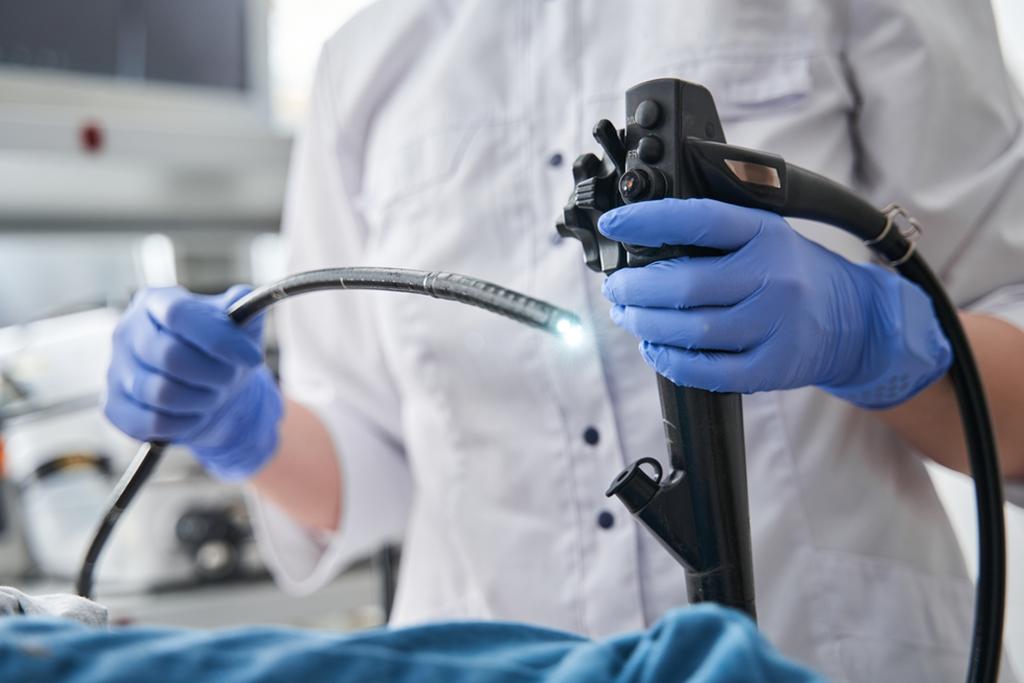
This innovation could make screening for esophageal cancer and Barrett’s esophagus easier, quicker,
and more patient-friendly.
What Is the Sponge on a String Test?
The test is as simple as it sounds. A small capsule containing a sponge is swallowed by the patient.Once it reaches the stomach, the capsule dissolves, and the sponge expands. The sponge is then gently pulled back up using the string attached to it, collecting cells from the lining of the esophagusalong the way.

These cells are examined in a lab to check for signs of Barrett’s esophagus—a condition where long-term acid reflux damages the esophageal lining and increases the risk of cancer.
Advantages Over Traditional Endoscopy
- Minimally invasive: No need for sedation or hospital admission
- Quick procedure: Takes only about 10 minutes
- Cost-effective: More affordable than an endoscopy
- Patient-friendly: Less discomfort and anxiety compared to conventional scopes
Who Should Consider This Test?
The Sponge on a String test is particularly useful for people at risk of Barrett’s esophagus and
esophageal cancer, such as:
- Those with chronic acid reflux (GERD)
- Patients with long-term heartburn not responding to medication
- Individuals with a family history of esophageal cancer.
Is It a Complete Replacement for Endoscopy?
Not entirely. While the sponge test is promising for screening and early detection, patients with
abnormal results will still need a standard endoscopy for confirmation and treatment. In many
cases, the two tests will work hand-in-hand—screening first with the sponge test and following up
with endoscopy if needed.
Why This Matters?
Esophageal cancer often goes undetected until it is advanced, making early screening critical. By offering a simple and accessible alternative, the Sponge on a String test has the potential to save lives through early diagnosis.
Dr. Suryaprakash Bhandari is a leading Gastroenterologist and Interventional Endoscopist at
Gastrocare Clinic, Mulund, specializing in digestive health, advanced endoscopy, colonoscopy, and esophageal disease management.
Take the first step towards protecting your esophageal health— schedule a consultation with Dr. Suryaprakash Bhandari today.